



Shining 3D’s newest generation of wireless, fully integrated 3D scanners. These scanners feature built-in computing, touchscreens, and batteries, allowing for a completely cable-free scanning workflow.
25+ Years of Experience in 3D Scanning.
In a market saturated with generalist retailers saturated with "box-movers", 3D Printer Superstore stands apart as a technical authority. Our team brings over 25 years of practical experience in industrial design, reverse engineering, and metrology inspection.
We do not simply retail hardware; we consult on complex workflows. Our background includes experience in a broad range of industries including automotive design, product development, aerospace, military, gas and mining which allows us to validate the equipment we sell against real-world engineering standards.
When you source Shining 3D equipment from us, you are accessing a reservoir of technical knowledge that ensures your investment meets the strict tolerance and repeatability requirements of your specific application.
Shining 3D Metrology Quality Control & Inspection
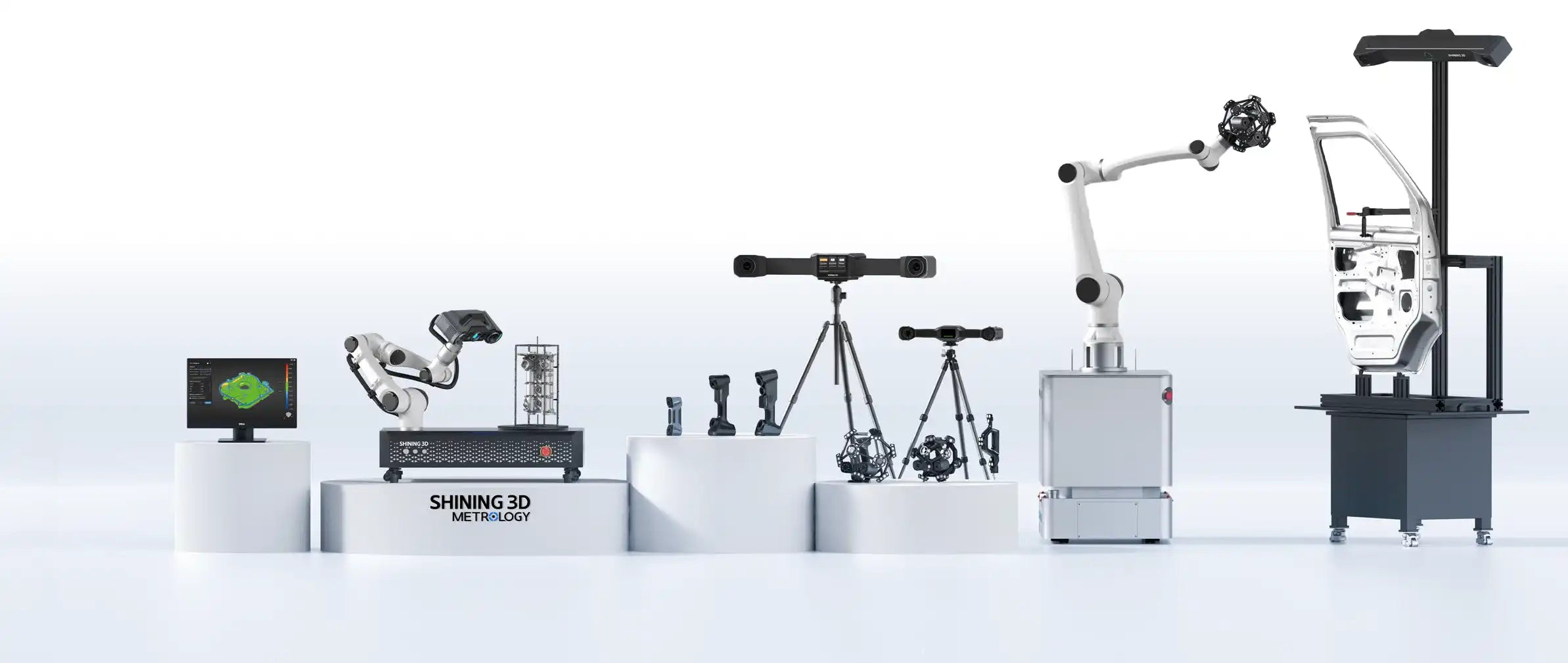
The Shining 3D Metrology series is an elite tier of industrial 3D measurement systems specifically engineered for high-precision quality control, dimensional inspection, and automated manufacturing. This range represents the pinnacle of Shining 3D's technical capability, featuring the OptimScan Q series for ultra-fine detail capture with accuracy up to 0.005mm, and the FreeScan Trak series for markerless dynamic tracking on large-scale industrial components. These systems are certified to international VDI/VDE 2634 and ISO 10360 standards, providing traceable data for mission-critical sectors such as aerospace, medical device manufacturing, and automotive QA. By integrating with SHINING3D Inspect software, these tools enable Australian manufacturers to perform comprehensive GD&T analysis, deviation mapping, and automated batch reporting directly on the shop floor.
Industrial Inspection Workflows: Precision & Consistency
The Metrology series moves beyond general design and enters the realm of certified verification. Our laboratory insights highlight four primary applications for these high-end systems:
Automated Quality Control: Deploy the RobotScan series for inline or near-line inspection. These systems use pre-validated scan paths and robotic integration to eliminate operator error, ensuring every part in a production run meets its specified tolerances.
Precision Small-Part Inspection: The OptimScan Q series utilises high-resolution 12.3MP cameras and blue LED fringe technology to inspect tiny mechanical components, electronics, and precision moulds. It captures minute surface deviations that handheld scanners might overlook.
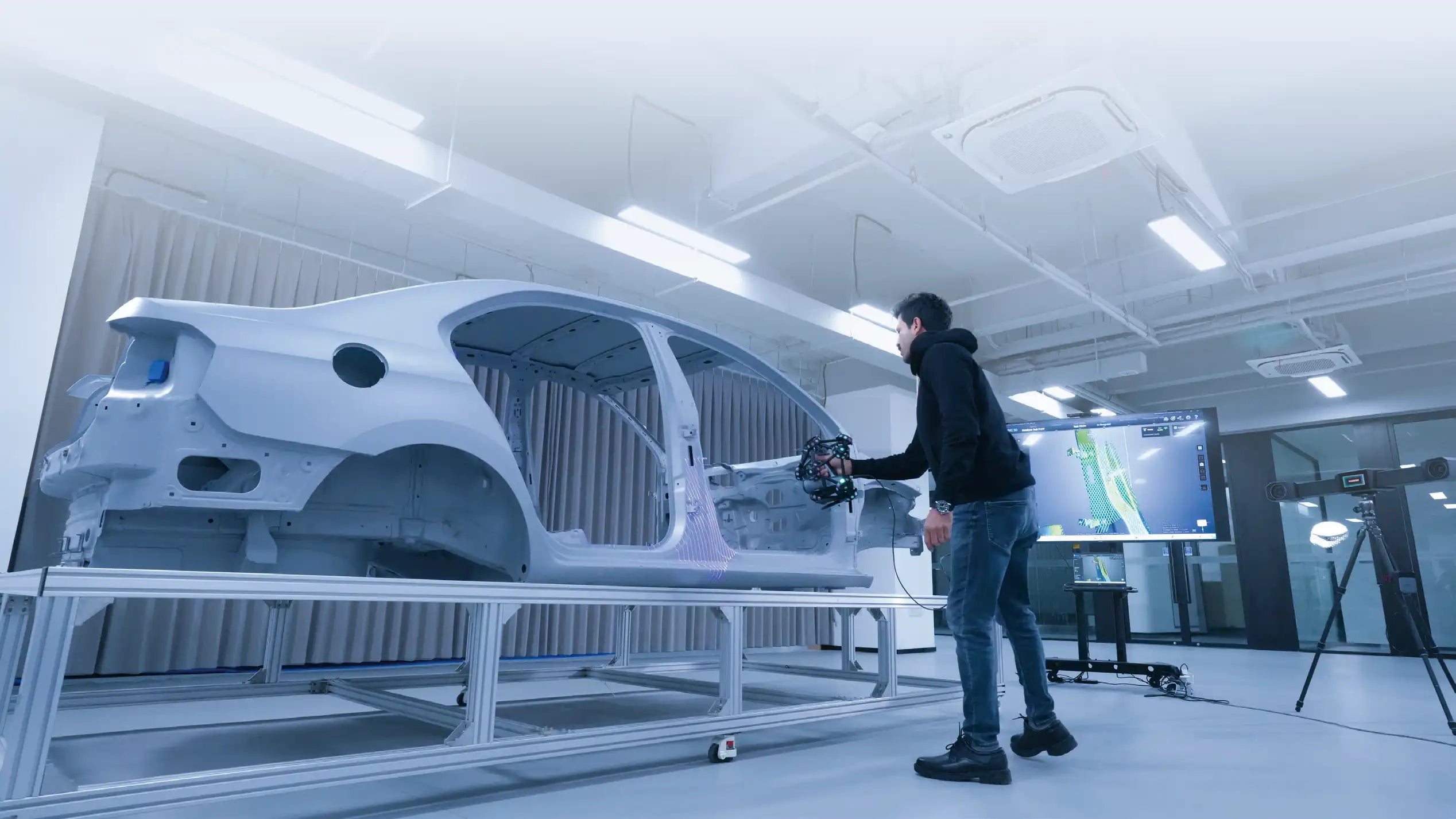
Large-Scale Markerless Tracking: The FreeScan Trak and FreeScan Omni systems use optical dynamic tracking to digitise oversized parts—like aircraft wings or turbine blades—without sticking reference markers on the object. This is essential for protecting delicate finishes or scanning in high-volume environments.
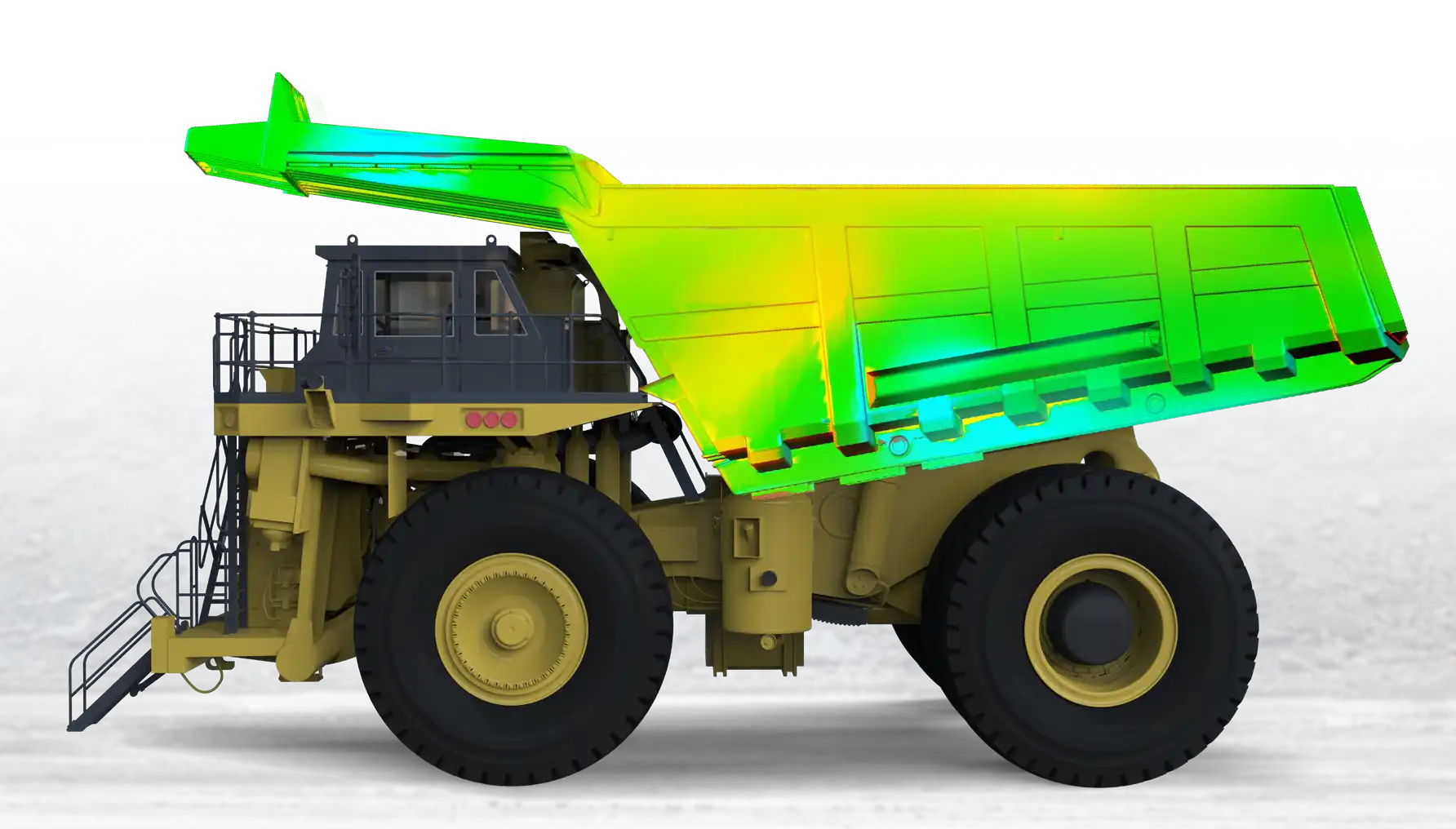
GD&T & Deviation Analysis: Using SHINING3D Inspect, users can perform full-field 3D comparisons against original CAD files. This provides instant visual feedback through heatmaps, identifying exactly where material is in excess or lacking relative to the design intent.



OptimScan / AutoScan Series
Shining 3D Metrology’s structured light ecosystem—headlined by the OptimScan and AutoScan Inspec2—is engineered for high-precision industrial inspection and metrology.
The OptimScan series employs narrow-band blue light technology to mitigate ambient light interference, delivering the sub-micron accuracy essential for aerospace and automotive quality control.
For small, complex components, the AutoScan Inspec2 provides a fully automated desktop solution. Its dual-camera system and 3-axis turntable synchronise to capture intricate geometries without manual repositioning, ensuring repeatable, lab-grade data capture. Both units output high-density point clouds that integrate seamlessly into standard metrology software, allowing for immediate deviation analysis against original CAD designs.


3D Letter Signage Machines


OptimScan Q Series
Discover
Unsure Which Model is Your Perfect Match?
Choosing the right 3D scanner is crucial. Let our experience be your guide.
Tell us what you want to create, and we'll give you a recommendation based on your goals and budget.
Talk to the team at 3D Printer Superstore and get the right advice the first time.
Shining 3D FAQ's
Do Shining 3D scanners require an ongoing software subscription?
Do Shining 3D scanners require an ongoing software subscription?
No. The entire Shining 3D ecosystem—spanning the entry-level Einstar through to the metrology-grade FreeScan series—operates on perpetual software licenses. You purchase the hardware; the EXScan software and all future firmware updates are included. This eliminates the operational friction associated with annual licensing fees common in competing industrial metrology platforms. The software outputs directly to universal formats including STL, OBJ, and PLY, with advanced suites facilitating direct STEP/IGES export for immediate CAD integration.
How frequently do Shining 3D scanners require calibration?
How frequently do Shining 3D scanners require calibration?
Calibration frequency scales inversely with hardware tier. Handheld structured light units and desktop models like the EinScan SE V2 require recalibration via the included glass board before each new session or if ambient temperature shifts dramatically. High-end metrology systems are built for shop-floor endurance. Units like the FreeScan UE Pro2 hold their factory ISO 17025 certified calibration for extended periods, operating reliably across 8 to 12-hour production shifts without requiring an on-the-fly recalibration sequence. Keeping the scanner stored in a temperature-controlled, low-humidity environment drastically extends calibration validity.
What is the difference between point cloud density and volumetric accuracy?
What is the difference between point cloud density and volumetric accuracy?
A dense point cloud does not guarantee a metrologically accurate mesh. Point cloud density dictates the visual resolution of the final geometry—how sharp a specific edge or surface texture appears. Volumetric accuracy, measured in mm/m (millimetres per metre), dictates the spatial truth of the entire scanned object. If you are reverse engineering an automotive chassis, a scanner with 0.02 mm volumetric accuracy ensures the mounting holes are exactly where they exist in physical reality, regardless of how "smooth" the point cloud looks. Shining 3D’s laser units prioritise absolute spatial truth over inflated point counts, reducing raw file size while maintaining certified tolerances.
Can EinScan and EinStar scanners capture highly reflective, black, or transparent surfaces?
Can EinScan and EinStar scanners capture highly reflective, black, or transparent surfaces?
Optical physics dictates strict limitations on pure LED structured light. The Einstar and EinScan series rely on projecting light patterns and reading the deformation. Transparent surfaces let the light pass through; highly specular (shiny) surfaces scatter the pattern; pure black surfaces absorb the light. To capture these materials with mid-tier hardware, operators must apply a transient scanning spray, such as AESUB Blue, to create a matte, highly readable surface. Conversely, Shining 3D’s hybrid units—deploying intersecting blue laser crosses—slice through ambient light interference and surface absorption, capturing machined aluminium and dark carbon fibre without physical surface preparation.
What are the workstation requirements to process EXScan data?
What are the workstation requirements to process EXScan data?
Meshing raw point clouds into watertight digital twins requires aggressive computational overhead. Laptops running integrated graphics will crash during complex registration. Shining 3D software relies heavily on CUDA cores for frame alignment and mesh generation. A modern workstation requires a dedicated NVIDIA RTX GPU (RTX 3060 at a baseline, RTX 4080 or A-series preferred for industrial workflows), a multi-core processor (Intel Core i7/i9 or AMD Ryzen equivalent), and at least 32GB of high-speed RAM. Upgrading to 64GB of RAM is standard practice for managing massive, multi-gigabyte point clouds generated during large-scale automotive or aerospace capture.


