


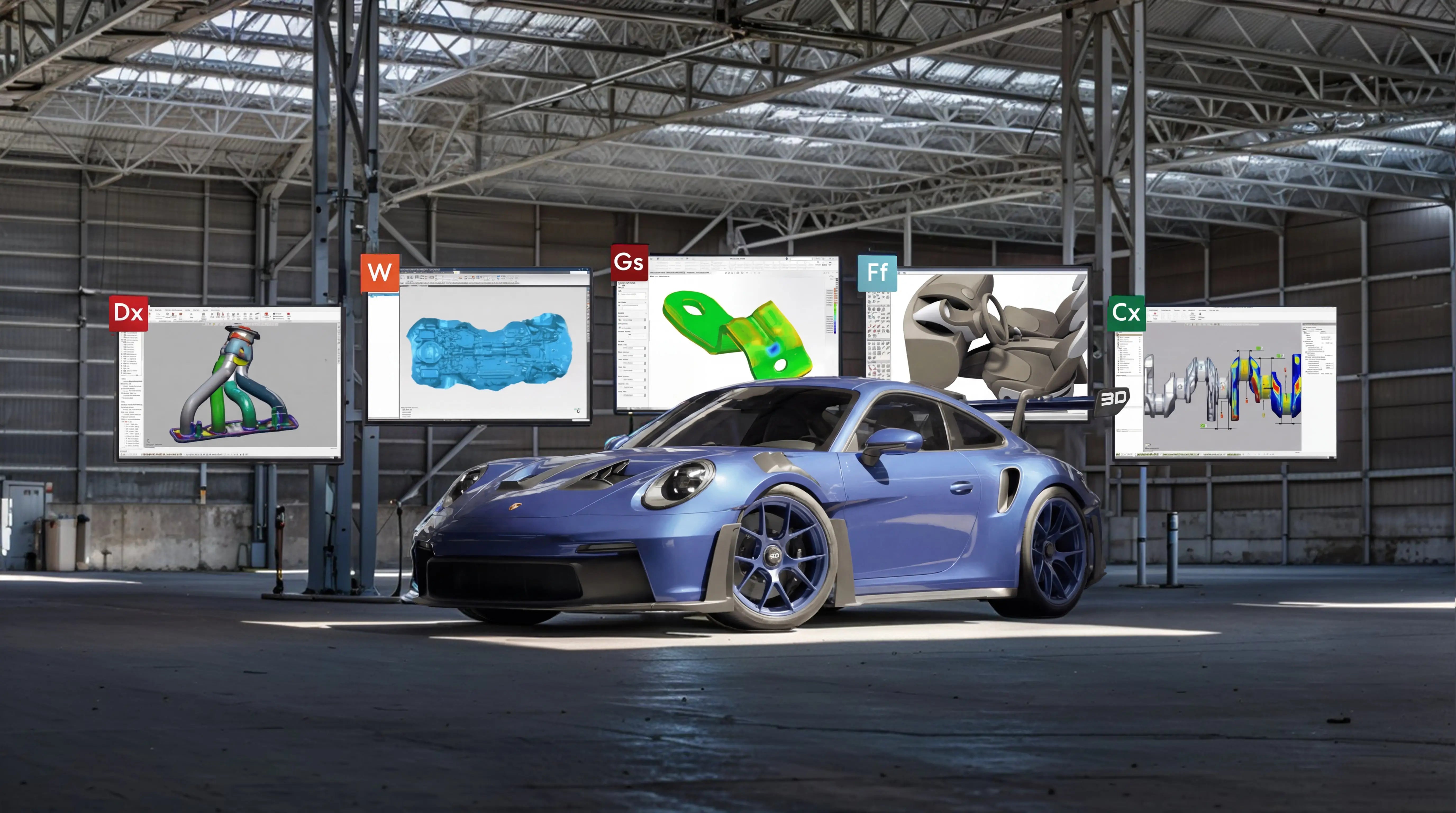


Shining 3D OptimScan Q Series High-Precision 3D Inspection Scanners
The Shining 3D OptimScan Q series redefines stationary metrology through the deployment of proprietary Monocular-Stereo Fusion (MSF) technology. Engineered for ultra-high-precision inspection and high-fidelity reverse engineering, the OptimScan Q9 and Q12 deliver laboratory-grade data density that captures the most minute geometric nuances of small to medium-sized components.
By fusing traditional stereo vision with a high-resolution monocular camera, MSF technology eliminates the typical data voids found in complex deep holes and narrow slots. These units are purpose-built for industries where a micron is the difference between success and failure, providing repeatable accuracy down to 0.005mm.
| Feature | OptimScan Q12 | OptimScan Q9 |
| Technology | Monocular-Stereo Fusion (MSF) | Monocular-Stereo Fusion (MSF) |
| Camera Resolution | 12.0 Mega Pixels | 9.0 Mega Pixels |
| Single Scan Accuracy | Up to 0.005 mm | Up to 0.007 mm |
| Scanning Speed | < 1.2 seconds per scan | < 1.5 seconds per scan |
| Volumetric Accuracy | 0.015 mm + 0.03 mm/m | 0.02 mm + 0.04 mm/m |
Key Industrial Applications
-
Precision Manufacturing: First-article inspection (FAI) and routine batch verification for high-tolerance CNC parts.
-
Aerospace Components: Detailed analysis of turbine blades, impellers, and fuel injection nozzles.
-
Automotive Powertrain: Validation of engine head geometries and gearbox housings.
-
Medical Engineering: Digitising intricate orthopedic implants and surgical instruments with absolute fidelity.
Technical Insight: The MSF Advantage
Traditional 3D scanners often struggle with "line-of-sight" limitations when encountering deep pockets or steep vertical walls. The OptimScan Q Series solves this through MSF technology, which intelligently combines data from multiple optical sensors to reconstruct surfaces that are otherwise invisible to standard stereo systems.
The integration of high-resolution sensors (up to 12MP) allows for an exceptional point-to-point distance, ensuring that sharp edges and fine surface textures are preserved without the "rounding" effect common in lower-resolution hardware. This is critical for CAV (Computer Aided Verification), where the digital twin must be an exact mathematical replica of the physical part to produce valid deviation heat maps against original CAD data.


