


OptimScan Q9


Couldn't load pickup availability


Metrology-Grade 3D Inspection Systems


Superior Accuracy
Fixed Structured Light technology, combined with high-grade optics, ensures the flagship OptimScan Q series achieves an industry-leading accuracy of 0.005 mm—the highest in the Shining 3D Metrology range.
Verified against VDI/VDE 2634 Part 2 and ISO 10360 standards. Every system is tested in our ISO 17025-accredited laboratory to ensure the highest level of repeatability and metrological traceability.


Superior Edge Fidelity
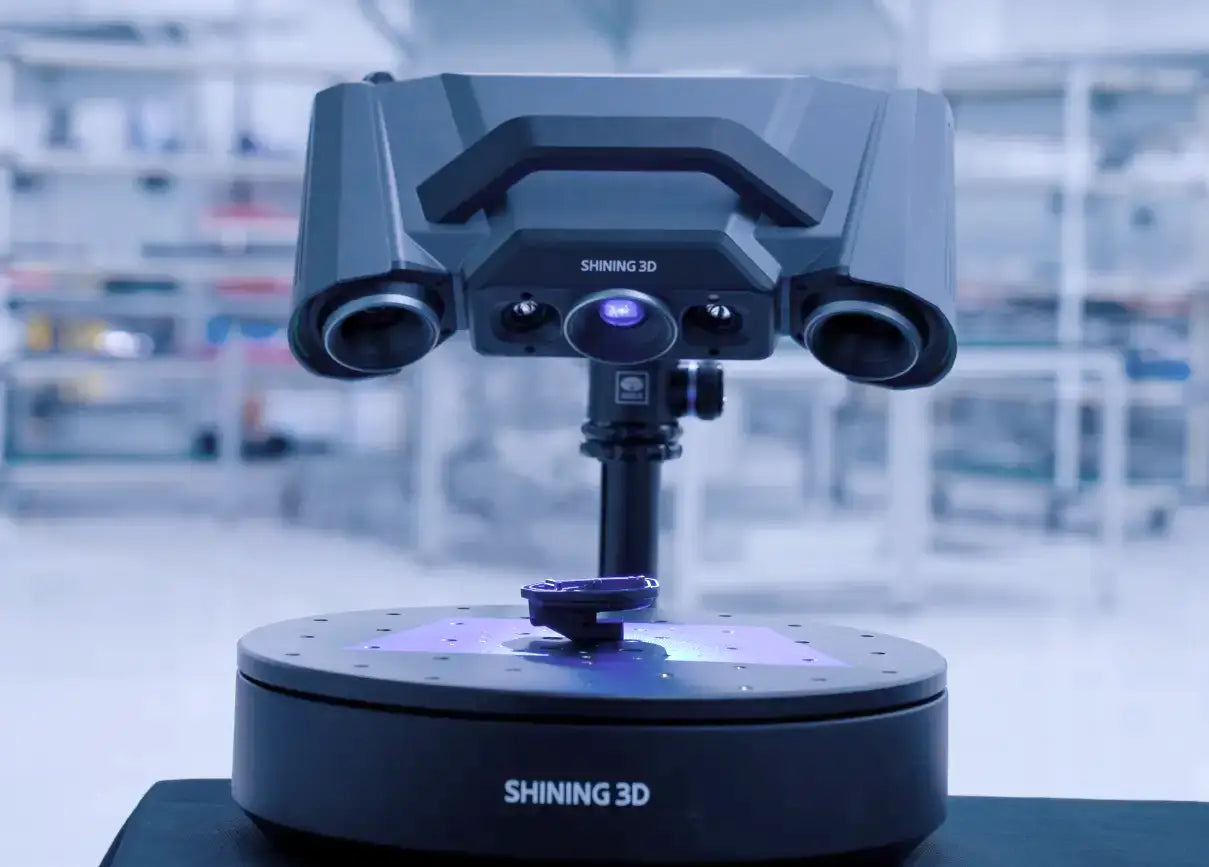
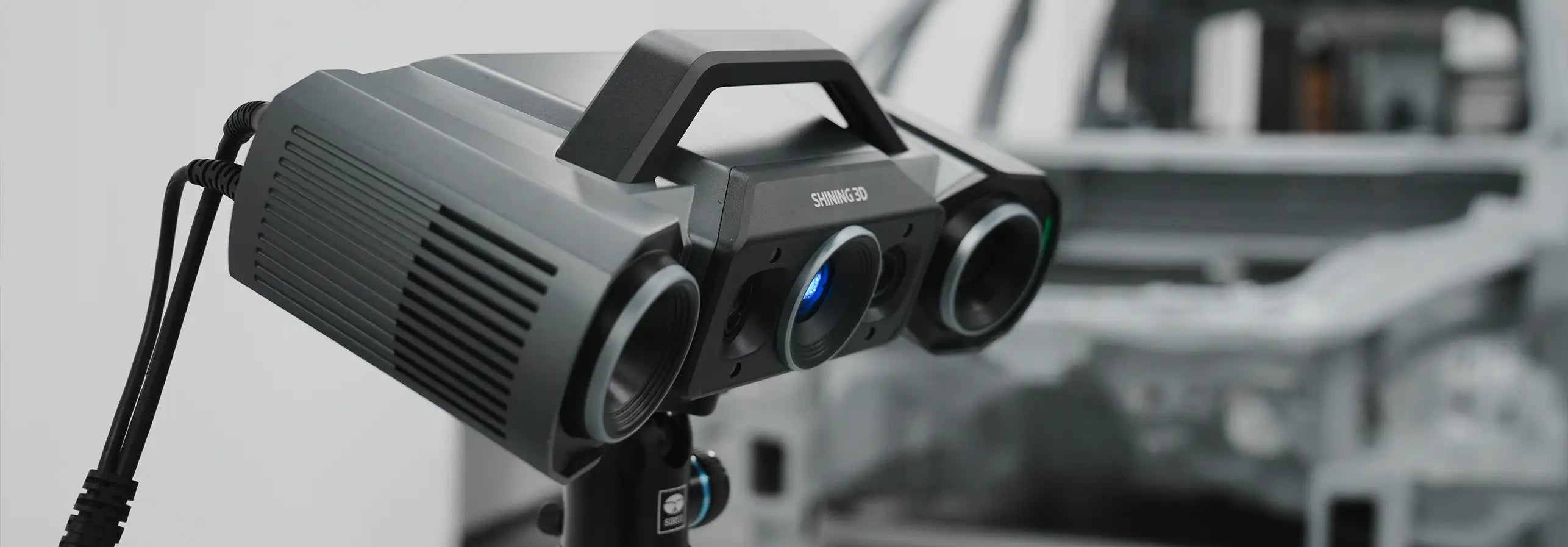
Handheld scanners rely on the steady hand of the operator. Because the OptimScan is fixed on a tripod or robotic arm, it eliminates human-induced noise, ensuring the most repeatable data for certified inspection.
Blue Light Precision
By using a narrow-band Blue LED light source, the scanner effectively filters out ambient factory lighting. The shorter wavelength of blue light also allows for finer resolution and less "speckle" than red light or infrared systems.


Zero Operator Influence
Because the scanner is stationary and operates like a high-speed 3D camera, it is the only viable choice for fully automated robotic inspection for repetitive inspection tasks.
Ready for Automation
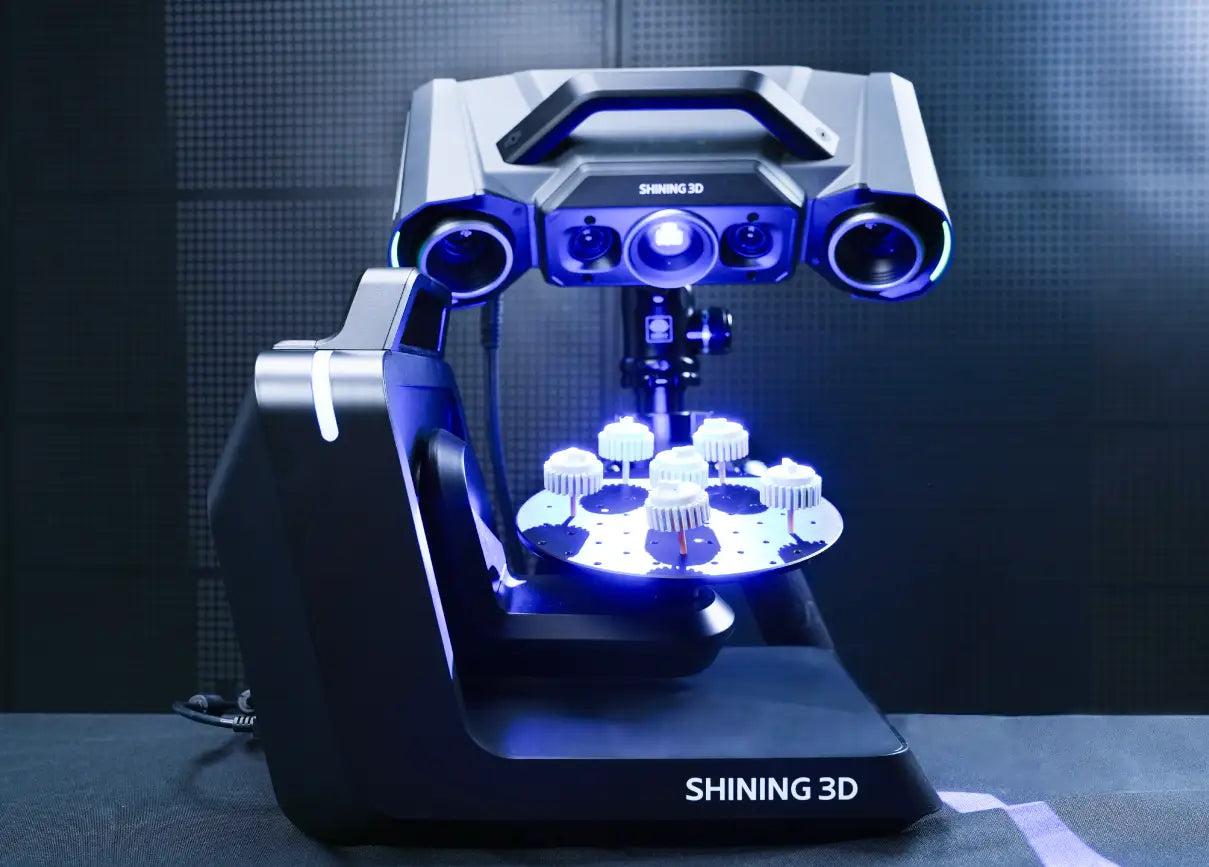
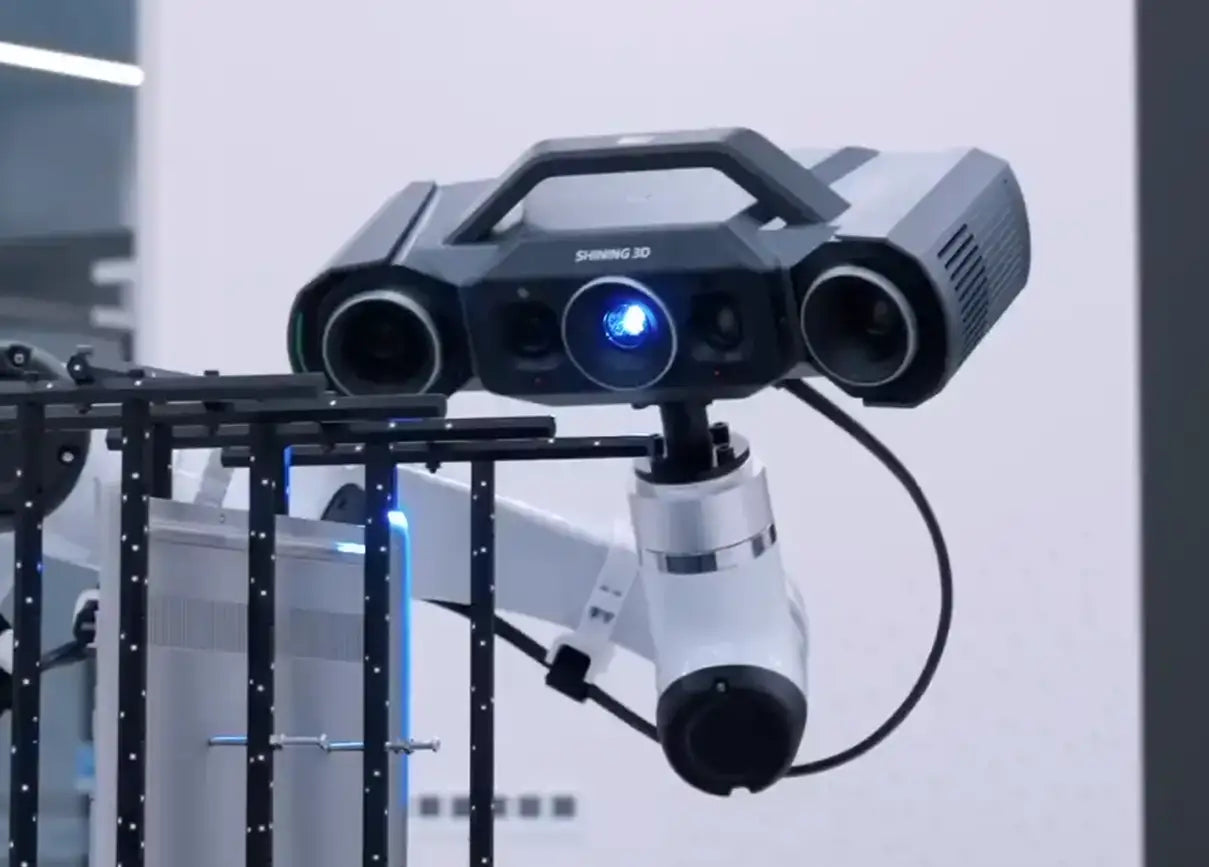
Intergating the OptimScan with RoboScan- an end-to-end automated solution for batch inspection, in-line measurement, quality control, and digital traceability. This system includes a robot arm, controller base, and turntable which can be fully customised to rapidly acquire precise geometric data and automatically generate detailed inspection reports.


In-Line Inspection Workflows
The OptimScan Q Series is designed to function as the optical "eyes" of your production line. By seamlessly integrating with intelligent 3D inspection ecosystems, the Q Series facilitates a fully autonomous metrology workflow, eliminating manual bottlenecks and ensuring 100% quality assurance.
Automated Report Generation
The workflow concludes with the instant generation of comprehensive inspection reports. These documents provide actionable insights—such as pass/fail validation and trend analysis—allowing for immediate adjustments to the manufacturing process.


Dual Scan Range
The OptimScan Q series utilises a unique quad-camera system to provide two distinct scan ranges: a Large Range (430 × 300 mm) for speed and a Small Range (160 × 110 mm) for precision. Users can switch between these modes with a single click, eliminating the risk of human error and the downtime associated with manual lens recalibration. Advanced software algorithms then fuse the data to ensure every scan delivers both structural context and high-resolution detail.


Monocular-Stereo Fusion (MSF)
For precision metrology, capturing deep grooves, narrow gaps, and internal recesses has traditionally been a bottleneck. Conventional fixed 3D scanners are often limited by "line-of-sight" constraints, forcing operators to manually reposition the part and perform multiple redundant scans to fill in data gaps.
How MSF Works
When MSF is enabled, the scanner doesn't just take one image; it captures three independent data sets simultaneously in a single shot:
- Stereo Data: High-accuracy measurements captured by the combined left and right cameras.
- Left Monocular Data: Independent surface data from the left camera's unique perspective.
- Right Monocular Data: Independent surface data from the right camera's unique perspective.

High-Speed Metrology
Time is the most critical factor in industrial inspection. The Q Series executes each capture in less than one second, instantly generating a dense, high-resolution point cloud with metrology-grade precision. This hardware-accelerated processing ensures that even the most complex components are digitised in a fraction of the time required by traditional systems.


Intelligent Multi-Exposure Technology
Surface variance—such as the transition between shiny machined steel and dark carbon fibre—traditionally complicates the scanning process. To solve this, the OptimScan Q Series integrates Intelligent Automatic Exposure alongside multiple manual exposure modes.
Surface Adaptability: Automatically calculates the optimal light intensity for every pixel.
Optimised Workflows: Significantly reduces setup time by eliminating the need for constant manual recalibration.
Superior Results: Ensures high-contrast data remains clean and noise-free across a wide range of challenging surface conditions.
From Portable Precision to Fully Automated Inspection
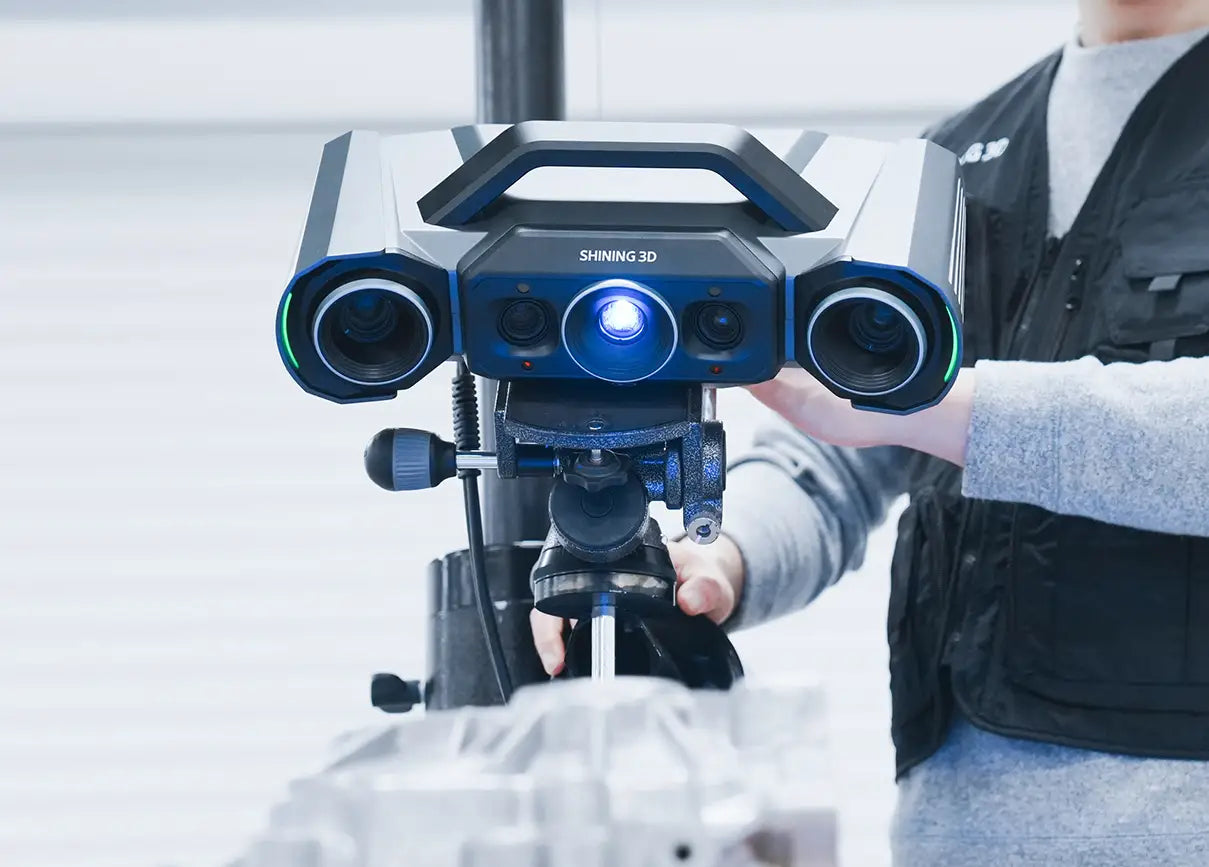
The OptimScan Q Series is engineered for maximum versatility, allowing Australian manufacturers to scale their quality control as their production demands evolve. Designed with a compact, industrial-grade footprint, the system facilitates high-precision scanning across three distinct operational modes:

Digitising Cultural Heritage: Using High-Precision 3D Scanner to Preserve and Reconstruct Oracle Bone Inscriptions
Discover how high-precision 3D scanning technology is revolutionizing the preservation of ancient oracle bones—capturing detailed inscriptions, enabling digital rubbings, and bringing early Chinese civilization to life through immersive digital models.

A New Method for Incoming Material Inspection: SHINING 3D Automated Inspection System
SHINING 3D combines high-precision 3D scanning with collaborative robotics to provide a fast, accurate, and reliable method for incoming material inspection.
Which OptimScan Q is Right for You?
Both systems share the same industrial platform, thermal stability, and certified 0.005 mm accuracy. The critical difference between the scanners is the resolution of the cameras used (9 megapixel vs 12.3 megapixel) which determines the data density of the captured point cloud.
OptimScan Q9 The Efficiency Specialist
Best for: General inspection, cast parts, sheet metal, and medium-to-large components.
Why choose it? The Q9 is built for speed and manageability. Its quad 9-megapixel cameras deliver high-fidelity data without the "data bloat" of ultra-dense point clouds. It offers the perfect balance of metrology-grade accuracy and file sizes that are fast to post-process and reverse engineer.
Point Distance: 0.05 mm.
OptimScan Q12 The Resolution Flagship
Best for: Aerospace components, micro-machined parts, complex threads, and research applications.
Why choose it? When every micron counts. The Q12 utilises quad 12.3-megapixel cameras to generate significantly denser point clouds. It is the definitive choice for capturing microscopic edge details, deep crevices, and features that require the absolute highest fidelity.
Point Distance: 0.04 mm.
| Technical Data | OptimScan Q9 Industrial Performance | OptimScan Q12 Metrology Flagship |
|---|---|---|
| Optics & Light Source | ||
| Resolution | 4 x 9.0 MP | 4 x 12.3 MP |
| Light Source | Blue LED Structured Light | Blue LED Structured Light |
| Metrology Accuracy | ||
| Accuracy (Small Range) | 0.005 mm | 0.005 mm |
| Accuracy (Large Range) | 0.015 mm | 0.015 mm |
| Scan Ranges & Detail | ||
| Small Range (FOV) | 160 x 110 mm | 160 x 110 mm |
| Small Point Distance | 0.05 mm | 0.04 mm |
| Large Range (FOV) | 430 x 300 mm | 430 x 300 mm |
| Large Point Distance | 0.11 mm | 0.10 mm |
| Working Parameters | ||
| Working Distance (S/L) | 210 mm / 590 mm | 210 mm / 590 mm |
| Depth of Field (S/L) | 60 mm / 300 mm | 60 mm / 300 mm |
| Single Shot Speed | < 1 s | < 1 s |
| Hardware & Certifications | ||
| Weight | 3.5 kg | 3.5 kg |
| Dimensions | 366 x 162 x 132 mm | 366 x 162 x 132 mm |
| Certifications | CE, FCC, ROHS, WEEE, KC, FDA, UKCA, IP50, TELEC, TiSAX | CE, FCC, ROHS, WEEE, KC, FDA, UKCA, IP50, TELEC, TiSAX |
| Acceptance Test | VDI/VDE 2634 Part 2 & ISO 10360 Certified (Tested in the ISO/IEC 17025 Accredited Accuracy Lab) |
VDI/VDE 2634 Part 2 & ISO 10360 Certified (Tested in the ISO/IEC 17025 Accredited Accuracy Lab) |
FAQ's
Not sure if this the OptimScan Q Series is right scanner for you?
Why should I purchase a OptimScan Q Series 3D Scanner from 3D Printer Superstore?
Why should I purchase a OptimScan Q Series 3D Scanner from 3D Printer Superstore?
When you invest in metrology-grade equipment, you need a partner, not just a vendor. With over 25 years experience in 3d scanning, reverse engineering and Inspection- 3D Printer Superstore is staffed by a dedicated team of Industrial Designers and Engineers who use this technology daily. We can provide deep technical consultation to ensure the equipment fits your specific engineering or inspection workflow, backed by a team that understands the practical realities of high-end 3D scanning.
Do you offer training and on-boarding for these scanners?
Do you offer training and on-boarding for these scanners?
Yes. We know that maximizing the ROI on the OptimScan Q series requires proper technique. We offer expert training resources and advice to get your team operational quickly. Because we use these scanners for our own reverse engineering projects, we can share practical "tips and tricks" and advanced workflow insights that go beyond standard manufacturer manuals.
What is the main difference between the OptimScan Q9 and OptimScan Q12
What is the main difference between the OptimScan Q9 and OptimScan Q12
The primary difference is resolution and point density.
OptimScan Q12: Features four 12.3-megapixel cameras, delivering a point distance of 0.04 mm. It is the ideal choice for aerospace, micro-machining, and applications requiring extreme surface detail.
OptimScan Q9: Features four 9-megapixel cameras, delivering a point distance of 0.05 mm. It balances metrology-grade accuracy with lighter file sizes, making it perfect for general industrial inspection, castings, and sheet metal.
Note: Both systems share the same certified accuracy of 0.005 mm
Does the OptimScan Q Series require scanning spray?
Does the OptimScan Q Series require scanning spray?
In most cases, no. The OptimScan Q Series utilises high-intensity Blue LED structured light, which has a much shorter wavelength than white light. This allows it to scan dark, shiny, or metallic surfaces effectively without coating. However, for transparent or mirror-like surfaces (e.g., glass or chrome), a thin layer of sublimating scanning spray is still recommended for physics reasons.
How does the Monocular-Stereo Fusion (MSF) technology work?
How does the Monocular-Stereo Fusion (MSF) technology work?
MSF allows the scanner to capture "blind spots" that other fixed scanners miss. By simultaneously capturing data from the stereo (both cameras) and independent monocular (left/right) perspectives, the system can see into deep holes, narrow grooves, and steep sidewalls in a single shot, reducing the need to reposition the part.
What is the accuracy of the OptimScan Q Series?
What is the accuracy of the OptimScan Q Series?
The OptimScan Q Series is a certified metrology instrument. It delivers a single-shot accuracy of up to 0.005 mm in the Small Scan Range and 0.015 mm in the Large Scan Range. Every unit is tested according to VDI/VDE 2634 Part 2 and ISO 10360 standards in an ISO 17025 accredited laboratory.
Can I automate the scanning process?
Can I automate the scanning process?
Yes. The OptimScan Q Series is "Automation Ready."
Semi-Automation: You can pair it with a Dual-Axis Turntable (optional) to automatically rotate and tilt the part, capturing a full 360° model without manual intervention.
Full Automation: The scanner can be mounted on a robotic arm (Cobot) for fully automated, in-line quality control in a production cell.
Is the scanner portable?
Is the scanner portable?
Yes. While it is a fixed station scanner (tripod-mounted), the unit itself weighs only 3.5 kg and is compact enough to be transported in a pelican case. This makes it suitable for moving between the quality control lab and the factory floor.
Can I see a demonstration before I buy?
Can I see a demonstration before I buy?
Absolutely. We invite you to contact us to arrange a demonstration at our Geelong, or If you are interstate, we can scheduled a time for a hands-on demonstration. You can bring your own parts to scan, allowing you to verify the accuracy and workflow suitability of the OptimScan Q Series for your specific application before investing.


