


Bambu Lab
Bambu Lab didn't just move the goal posts in 3D printing; they changed the entire game. The speed, quality, and out-of-the-box intelligence are simply phenomenal.
Here at 3D Printer Superstore, with over 12 years in the industry, we've seen it all. We can confidently say that this is one of the most significant leaps forward we've ever witnessed...


Bambu Lab 3D Printers


Creality
Our brand partner Creality, has revolutionised 3D printing since 2014 by making innovation accessible to all. They have cultivated a vibrant global community, and their commitment to empowering creators resonates perfectly with our own passion for technological advancement. Now focusing on the quality of user experience, not just specifications, they as a company align seamlessly with the core philosophy behind 3D Printer Superstore's Industry 5.0 strategy...


Creality 3D Printers


Flashforge
A key brand partner, Flashforge, is renowned globally for building powerful, reliable, and user-friendly 3D printers that cater to every level of user. Their success in Australia is built on a deep, long-standing foundation. In 2012, 3D Printer Superstore became their first strategic partner and distributor, introducing the Flashforge brand to the Australian market.
This decade-plus relationship (2012-2025) has been pivotal. It has provided Australian users with consistent, local support and established Flashforge as a highly trusted and reputable name. This is particularly true in the Australian STEM education curriculum, where the brand's reputation for safety, reliability, and ease of use has made their printers a go-to choice for Australian classrooms.
In 2026, Flashforge continues to innovate. They now dominate the hobbyest market with the AD5X multi-material 3d printer and the educational market with the high-speed Adventurer 5M series, which makes 600mm/s CoreXY printing accessible to everyone. The Adventurer 5M Pro model is especially ideal for educational and office environments, featuring a fully-enclosed, air-filtered, and quiet design. For professionals, the Guider 3 Ultra stands as a large-format, dual-extruder workhorse, engineered for non-stop, high-speed production with advanced, high-temperature composites like carbon fibre...

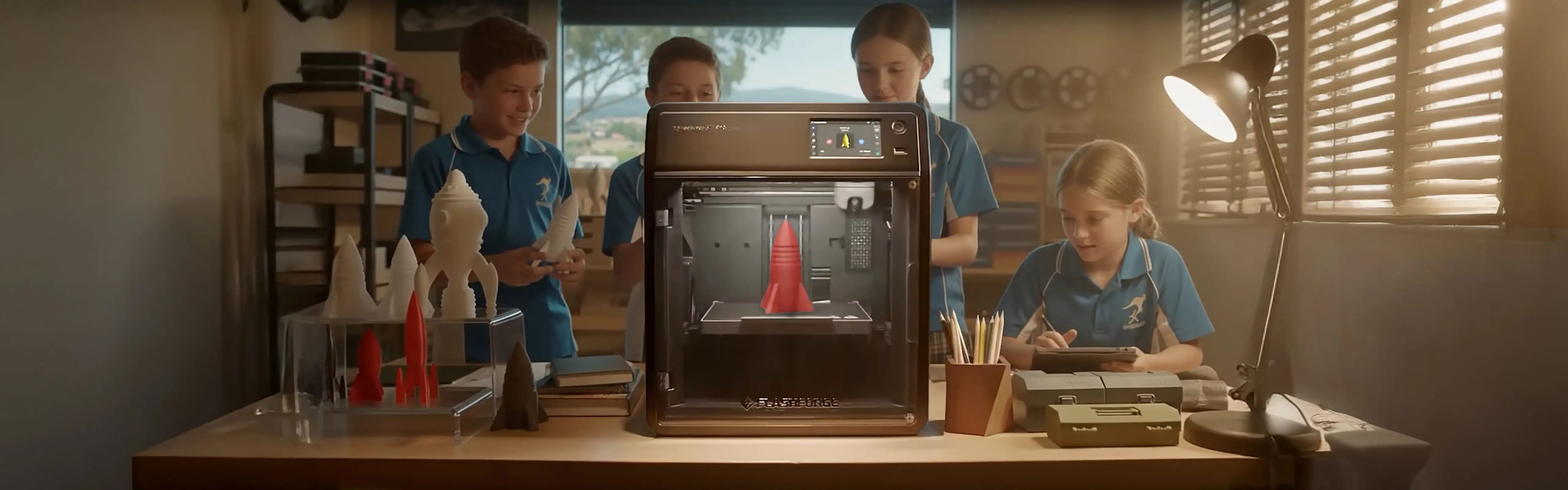
Flashforge 3D Printers


FLSUN
FLSUN is a global leader in high-speed Delta 3D printing technology, recognised for its focus on extreme velocity and mechanical efficiency. As a key strategic partner, 3D Printer Superstore has been the driving force behind the brand's growth in Australia, providing the necessary local expertise and technical backing for these unique motion systems. This partnership ensures that Australian users receive professional-grade support and a seamless path to adopting rapid Delta-style manufacturing.
The evolution of FLSUN technology has moved beyond simple speed to encompass professional precision and reliability. By mastering vibration compensation and high-torque motor control, FLSUN systems now offer a level of surface finish that rivals slower, traditional architectures. This reliability makes FLSUN a preferred choice for Australian industrial designers and prototyping labs that demand high-volume throughput without sacrificing dimensional accuracy.
Entering 2026, the FLSUN S1 and T1 represent the pinnacle of high-speed performance, featuring peak velocities of 1200mm/s and sophisticated AI-driven monitoring. The S1, equipped with AI Lidar and a high-flow hotend capable of 110mm³/s, is engineered for demanding production environments where speed is critical to the bottom line. Meanwhile, the T1 provides a robust, enclosed platform for users seeking 600mm/s speeds in a compact, efficient footprint, solidifying FLSUN’s position as the authority in ultra-fast, high-precision Delta printing...

FLSUN 3D Printers


HeyGears
Born from Industrial Precision
HeyGears did not enter the market to compete with consumer-grade electronics; they established themselves by solving complex manufacturing challenges in the high-stakes fields of digital dentistry and medical audiometry. In these industries, precision is mandatory and downtime is not an option. This pedigree is evident in every aspect of their hardware, which prioritises repeatability, dimensional accuracy, and continuous operation over gimmicks.
3D Printer Superstore is proud to act as a strategic distribution partner for HeyGears in Australia. We understand that professional workflows require more than just hardware—they require a reliable supply chain. We pride ourselves on being the leading independent experts in 3D printing technology in Australia. We know that investing in a Heygears machine is about more than just the hardware—it's about the result.
Our partnership guarantees you access to local aligned technical support. We bridge the gap between HeyGears’ global R&D and your local production line, ensuring seamless integration into your business operations...

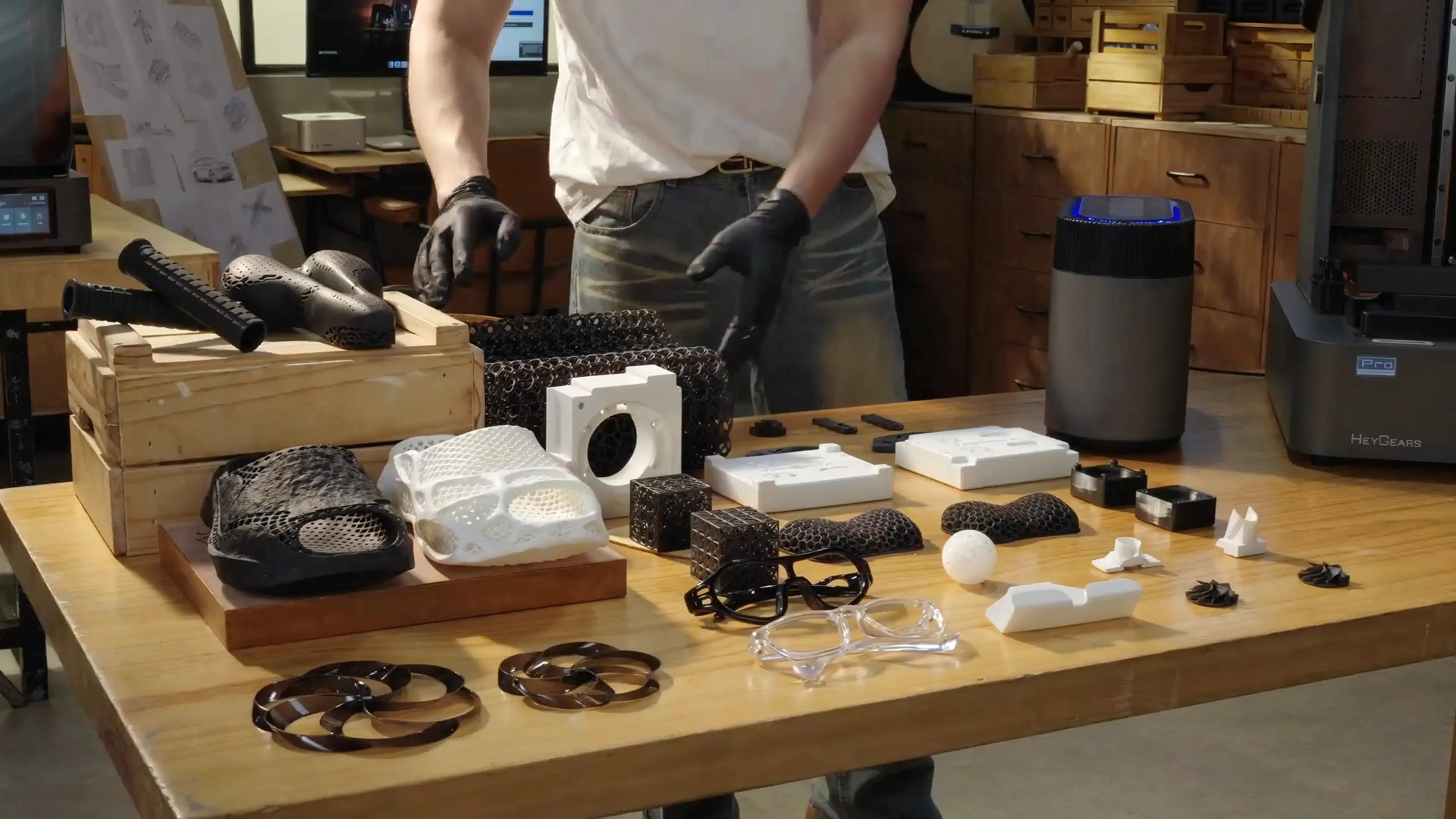
HeyGears 3D Printers


MakerBot / UltiMaker
The 3D Printer Superstore is a Certified MakerBot Specialist Partner. Providing full service and training solutions for professionals, consumers and educators in universities, secondary and primary schools. Our dedicated team can show you how to get the most out of your investment and how best incorporate 3D printing and 3D scanning into school STEM educational curriculum.
In this new era of 3D printing, our specialist status is more valuable than ever. It ensures that when you invest in a MakerBot or UltiMaker solution, you are backed by a team with direct lines to the manufacturer and deep expertise across the entire combined portfolio.


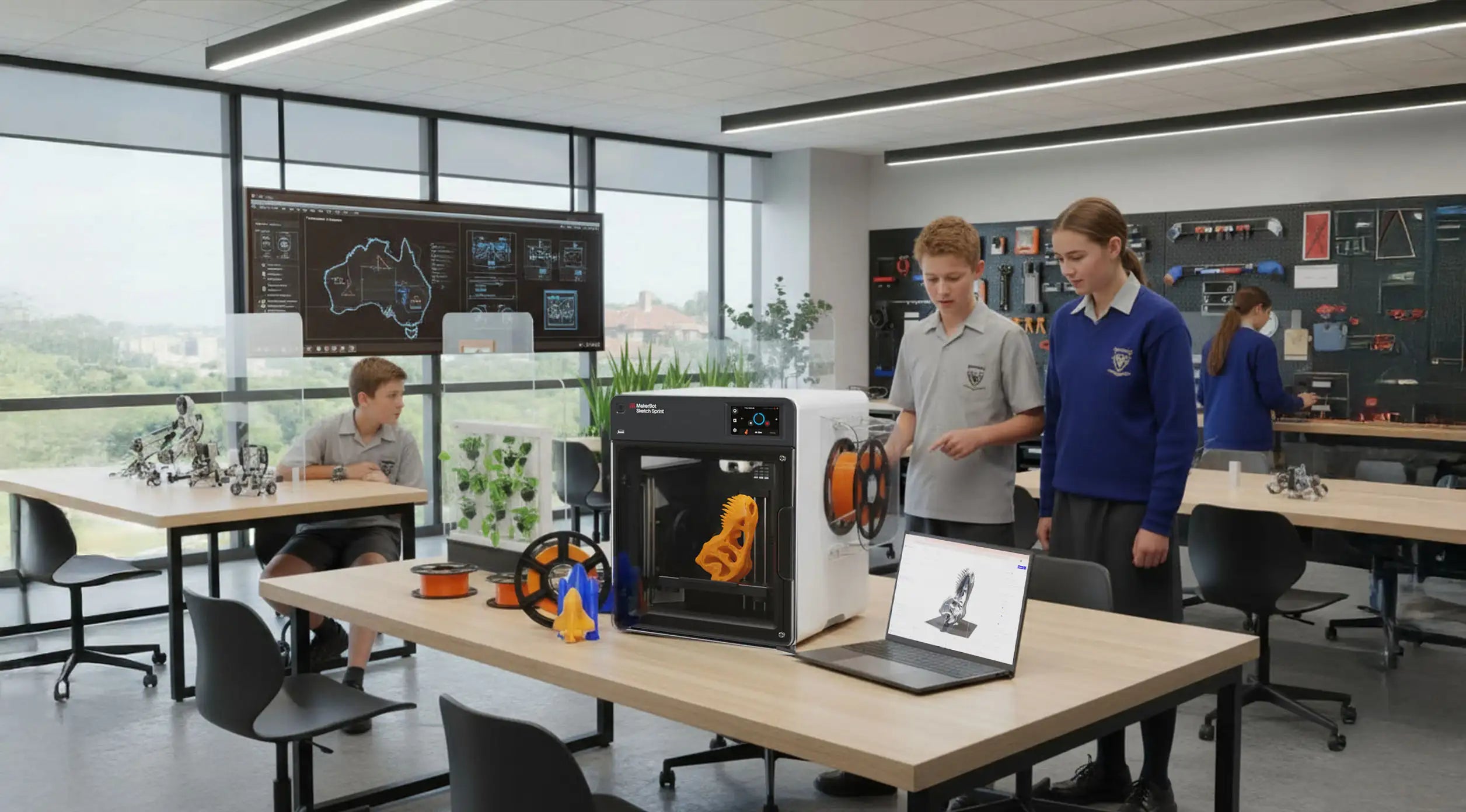
MakerBot 3D Printers


Mingda
Australian Distributor and Strategic Partner for Mingda.
Buying an industrial 3D printer isn't just a purchase; it's a partnership. 3D Printer Superstore, Australian Distributor and Strategic Partner for Mingda offers you security that grey importers simply can't match.
Founded in 2012, MINGDA offer large format 3D printers engineered for industrial applications. MINGDA is at the forefront the additive manufacturing evolution offering a range of large format 3d printing solutions for industrial applications including functional prototypes, factory tooling, patterns & molds, and end-use parts..

Mingda 3D Printers


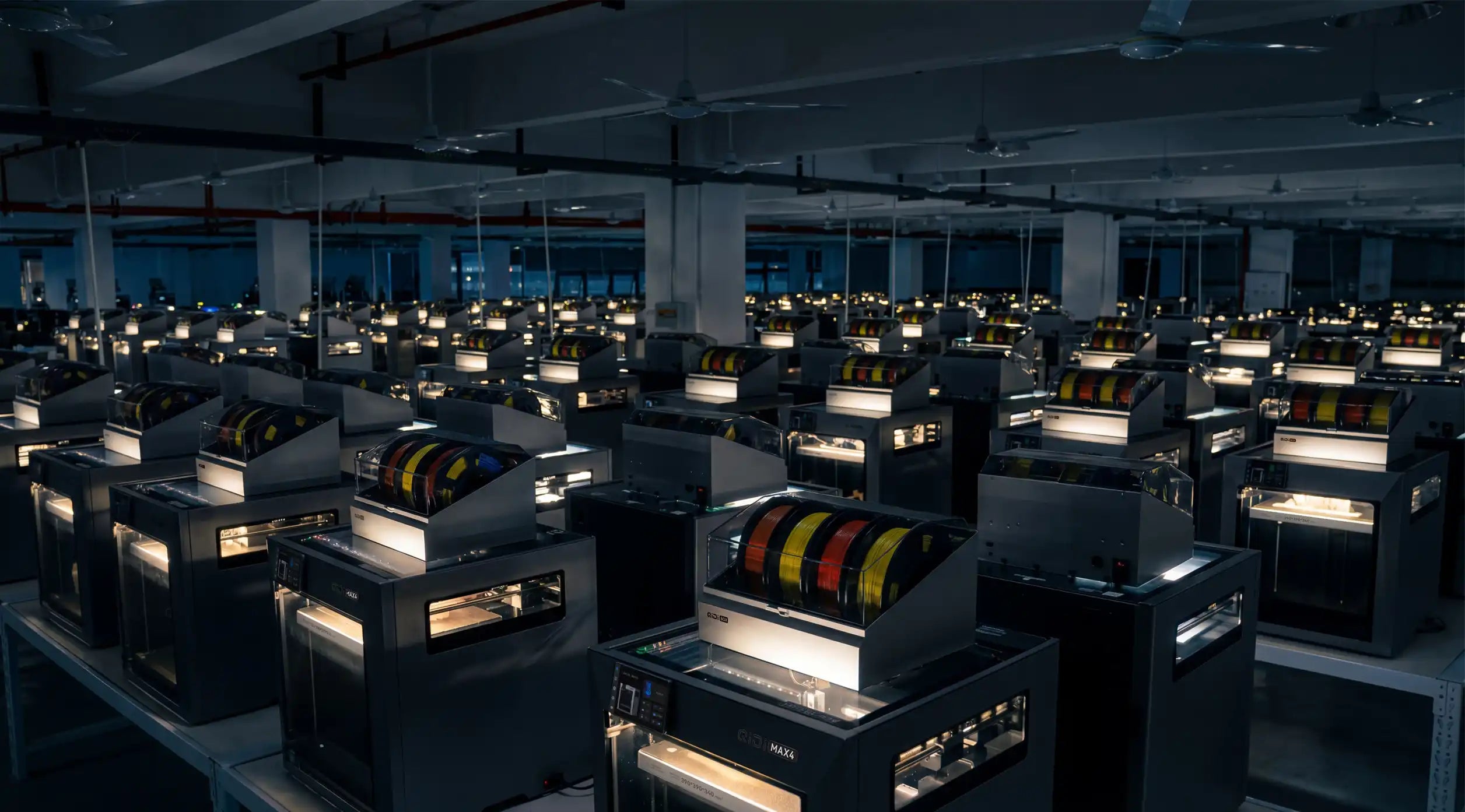
Qidi Tech 3D Printers
Founded in 2014, Qidi Technology (Qidi Tech) established itself early on by producing some of the most reliable enclosed 3D printers in the world. While many competitors raced to the bottom with open-frame "hobby" kits, Qidi stayed true to a different vision: bringing industrial reliability to the desktop. Over the last decade, they have evolved from producing sturdy multi-material workhorses to pioneering the modern "high-speed industrial" category. Today, they operate a 15,000-square-metre production facility with a dedicated R&D centre, ensuring every machine is built to a professional standard.


