


Bambu PETG Basic
Out of stock



Couldn't load pickup availability

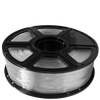
Bambu Lab PETG Basic
Bambu Lab PETG Basic delivers the ideal balance of structural strength and industrial toughness, engineered specifically to bridge the gap between high-performance physical properties and effortless printability. This completely modernised formulation moves past the trade-offs of historical PETG blends. It matches the sheer bending strength of PLA while maintaining the high impact resistance, thermal stability, and environmental endurance that industrial applications demand. Fully integrated with the Bambu Lab Automatic Material System (AMS) ecosystem via native RFID technology, it ensures real-time parameter configuration and absolute reliability on the factory floor or design studio.

Key Technical Enhancements
-
Engineered Isotropic Strength: The updated formulation matches PLA Basic in mechanical strength while retaining characteristic high toughness, allowing parts to sustain high structural loads without brittle failure modes.
-
Advanced Surface Defect Mitigation: Significantly lower moisture sensitivity drastically reduces stringing, oozing, and cosmetic surface degradation compared to legacy PETG materials.
- Enduring Environmental Resistance: High natural stability against UV exposure, moisture absorption, and thermal stress makes it highly dependable for functional outdoor enclosures and mechanical sub-assemblies.
- Intelligent RFID Integration: Internal RFID tracking instantly syncs optimal temperature, speed, and extrusion profiles directly to Bambu Studio upon loading into any AMS series unit.
Technical Specifications & Performance Data
The mechanical architecture of the updated Bambu PETG Basic reflects significant refinement in polymer composition, exhibiting definitive improvements over both standard PLA profiles and high-flow variants where mechanical stability is paramount.
Mechanical Properties Comparison
| Material Property | Bambu PETG Basic (New Formula) | Bambu PETG HF | Bambu PLA Basic |
| Bending Strength (XY) | 75 MPa | 64 MPa | 76 MPa |
| Layer Strength (Bending Z) | 56 MPa | 48 MPa | 59 MPa |
| Impact Strength (Toughness XY) | 34.2 kJ/m² | 31.5 kJ/m² | 20.6 kJ/m² |
| Filament Diameter | 1.75mm ± 0.03mm | 1.75mm ± 0.03mm | 1.75mm ± 0.03mm |
Hardware & Accessory Compatibility
| System Component | Recommended Integration | Restricted / Not Recommended |
| AMS Compatibility | AMS, AMS 2 Pro, AMS HT, AMS lite | None (Fully Supported) |
| Build Surfaces | Cool Plate SuperTack, Smooth PEI Plate, Textured PEI Plate | Printing without clean surface prep |
| Hotend Infrastructure | All nozzle diameters and material compositions | None |
Essential Processing & Operational Guidelines
Achieving crisp details and maintaining high dimensional precision requires adhering to standard laboratory material handling protocols. PETG Basic displays robust resistance to humidity, but thorough preparation guarantees optimal layer cohesion.
Mandatory Pre-Print Thermal Drying
If the filament is exposed to ambient atmospheric conditions with relative humidity exceeding 50% for more than 72 hours, it must be thoroughly dried using one of the following validated thermal schedules to prevent internal micro-voids:
-
Filament Dryer: 65°C for 8 hours.
- Internal Heatbed Method: 80°C for 12 hours.
Storage & Print Management
-
Production Environment: Maintain storage environments below 20% relative humidity using active desiccant packs inside sealed enclosures.
- Build Plate Adhesion: PETG Basic forms an exceptionally strong molecular bond with PEI surfaces. Always allow the build plate to cool completely to room temperature prior to part extraction to protect the bottom surface finish from premature separation stress or tearing.
What is the difference between Bambu PETG Basic and PETG HF?
The primary difference lies in the mechanical profile: the new Bambu PETG Basic prioritises superior raw structural strength, delivering a bending strength of 75 MPa (XY) compared to the 64 MPa of PETG HF. While PETG HF is optimised for rapid volumetric extrusion, PETG Basic is formulated for high-load functional engineering applications requiring greater impact resistance and maximum layer-to-layer molecular bonding.
How do you prevent Bambu PETG Basic from sticking too hard to PEI plates?
To prevent surface tearing when printing Bambu PETG Basic, always allow the build surface to cool completely to room temperature (below 30°C) before attempting part removal. For smooth PEI surfaces or Cool Plates, applying a thin, uniform layer of glue stick or a dedicated interfacial release agent is mandatory to act as a separation barrier and safeguard the longevity of the build surface coating.


